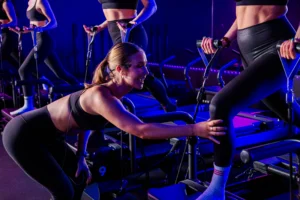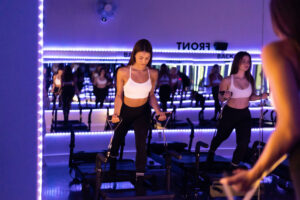

You see “Modern Pilates” or “High-Intensity Pilates” on studio schedules, social media, and class descriptions everywhere—but step into two different studios and you may have two completely different experiences.
One class may feel like traditional Pilates with music and faster transitions. Another may be built around strength, sustained muscular tension, athletic sequencing, and a completely different approach to intensity. Yet both may use the same name.
That is because Modern Pilates is not one standardized method.
Modern Pilates builds on familiar Pilates principles, including control, stability, alignment, and body awareness, while expanding the training experience through contemporary strength programming, varied sequencing, props, music, and new approaches to muscular fatigue.
The quality and purpose of a Modern Pilates class depend heavily on how it is programmed and taught.
As you navigate the wide variety of high-intensity Pilates, here are some of the most common myths about Modern Pilates—and what actually creates an effective class.
Myth #1: Modern Pilates Is Just Traditional Pilates Performed Faster
Speed alone does not make a class modern, athletic, or effective.
Some Modern Pilates classes move quickly. Others intentionally slow the movement down. The defining difference is not simply pace—it is how the workout uses variables such as resistance, tempo, exercise duration, range of motion, sequencing, and recovery.
At FIT, our FITformer classes use Slow Resistance Training built around Time, Tempo, and Tension. Exercises are performed slowly enough to remove momentum and keep the muscles working continuously. The challenge comes from staying under tension, controlling both directions of the movement, and remaining in the exercise long enough to create meaningful muscular fatigue.
A faster class may feel energetic, but faster is not automatically harder. When movement becomes rushed, members may lose resistance, control, or muscular engagement.
Modern programming should use speed with purpose—not simply to fit more exercises into the class.
Myth #2: Every Modern Reformer Class Is Basically the Same
A reformer is a piece of equipment. It does not determine the method.
Two studios may use similar spring-based machines while offering completely different workouts. One class may follow traditional Pilates sequences. Another may emphasize athletic conditioning, rapid transitions, or short exercise intervals. Another may use slower movement and extended time under tension to create a strength-focused workout.
The difference comes from the programming:
- How long each exercise is performed
- How exercises are sequenced
- Which muscle groups are layered together
- How resistance and body position are used
- Whether transitions support or interrupt the training goal
- How coaches cue tempo, alignment, and muscular intention
At FIT, the FITFormer is paired with the SRT principles. The equipment provides spring resistance, but the method determines how that resistance is used.
The machine matters. The programming matters more.
Myth #3: Heavier Springs Always Make an Exercise Harder
Spring resistance is not the same as adding weight to a traditional strength machine.
More spring tension may make it harder to push the carriage away, but it can also provide more assistance, stability, or support depending on the exercise and the direction of movement.
Lighter resistance may create less support and require greater control to stabilize the carriage. In some positions, that can make an exercise significantly more demanding for the core and supporting muscles.
This is why spring choice should not become a competition.
The goal is not to use the heaviest possible setting. The goal is to use the resistance that creates the intended muscular challenge while allowing the member to maintain control and effective range of motion.
A skilled coach understands not only how much resistance to use, but why it is being used.
Myth #4: High Intensity Requires High Impact
A workout does not need jumping, running, or heavy impact to be intense.
Impact describes the force placed on the body when it strikes a surface. Intensity describes how demanding the exercise is.
Modern Pilates can create substantial muscular intensity through:
- Slow, controlled repetitions
- Extended time under tension
- Continuous spring resistance
- Limited recovery
- Unilateral exercises
- Balance and stability demands
- Layered exercise variations
- Strategic sequencing of the same muscle group
This is one of the reasons slow movement can feel surprisingly difficult. Without momentum, the muscles must continue producing and resisting force through the entire repetition.
Low impact does not mean low effort. It means the challenge is created differently.
Myth #5: More Exercises Create a Better Workout
Variety can make a class engaging, but constant movement from one exercise to another does not automatically create better results.
Effective programming is not about fitting the greatest number of exercises into 45 minutes. It is about giving each exercise enough time and intention to do its job.
At FIT, both our Reformer and Mat classes organize the exercises into blocks that continue challenging a muscle group through related movements, variations, or changes in position. Rather than abandoning an exercise as soon as it becomes difficult, the programming allows fatigue to build.
This creates a very different experience from a class made up of short, disconnected movements.
Transitions matter too. A logical transition preserves focus and keeps the workout flowing. A rushed or complicated transition can create unnecessary downtime, confusion, or loss of muscular tension.
The best class is not necessarily the one with the most choreography. It is the one in which the programming has a clear purpose.
Myth #6: Modern Pilates Is Only About the Core
Core control remains an important part of Pilates, but Modern Pilates can be programmed as a true full-body strength workout.
Depending on the class, members may train the legs, glutes, back, chest, shoulders, arms, and core through pushing, pulling, squatting, lunging, hinging, rotating, and stabilizing movements.
The core is often working throughout, but it does not need to be the primary target of every exercise.
Modern Pilates also gives coaches more flexibility to organize training around different movement patterns, muscle groups, and strength concepts. A class may emphasize lower-body strength one day, upper-body endurance another day, or integrated total-body work throughout.
This broader programming approach is part of what allows Modern Pilates to serve members with different goals—not only those looking for a traditional core-focused practice.
Myth #7: Props, Music, and Heat Are Just Extras
These elements should not replace good programming, but they can meaningfully shape the class experience when they are used intentionally.
In a Modern Mat format, props such as dumbbells, mini bands, blocks, balls, or rings can add resistance, feedback, instability, or support. Music can create structure, energy, and pacing. Infrared heat can contribute to the atmosphere and overall experience of the class.
At FIT, our FIT Signature Sculpt combines mobility, strength training, props, music-based timing, and infrared heat in a 45-minute mat format. It is not designed as a passive stretching class or as a traditional mat Pilates sequence.
The props and environment support the workout—but the programming remains the foundation.
Myth #8: Modern Pilates Has Replaced Traditional Pilates
Modern Pilates does not need to reject the history of Pilates in order to evolve from it.
Traditional Pilates established enduring principles around control, concentration, precision, breath, stability, and coordinated movement. Modern Pilates draws from that foundation while incorporating newer equipment, contemporary strength concepts, flexible sequencing, group-class formats, and a wider range of training goals.
The two can coexist.
The value of Modern Pilates is not that it “fixes” traditional Pilates. It is that it applies many of the same foundational ideas in a different training environment—one that may feel more strength-focused, athletic, music-driven, or community-oriented.
What Defines a Strong Modern Pilates Class?
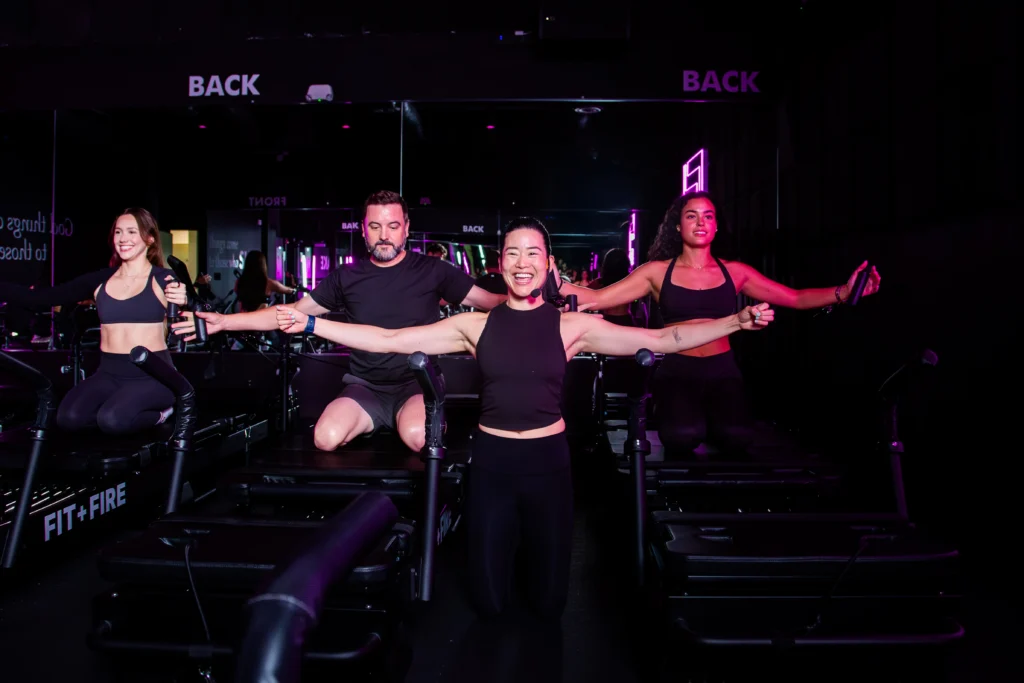
Because Modern Pilates is a broad category, the studio and method matter.
Look beyond the reformer itself and consider:
- Is the class intentionally programmed?
- Are exercises given enough time to create muscular engagement?
- Does the coach explain the purpose of the movement?
- Are resistance, tempo, and range of motion used thoughtfully?
- Do transitions support the flow of the workout?
- Is intensity created through control rather than chaos?
- Can the coach progress or modify the work without losing its purpose?
At FIT, the difference is not simply that we use a modern reformer or offer an athletic class environment. Our FITFormer classes are built around Slow Resistance Training, expert programming, and coaches trained to use Time, Tempo, and Tension with purpose.
Modern Pilates may be a broad category, but the method is what makes the workout effective. At FIT, the community is what gives the experience its purpose.