
Knee pain and stiff joints can make simple, everyday movements difficult. Many people look for natural remedies including exercises that improve mobility without adding extra stress to your joints.
Pilates has become a popular choice for people who experience knee and joint pain because of its focus on slow, controlled movements. These exercises help you move your body through its full range of motion making Pilates a low impact option for improving mobility and building strength.
Understanding What Causes Your Knee Pain and Joint Stiffness
Knee pain and stiff joints can develop for many different reasons. Oftentimes, there are several factors such as arthritis, inflammation, previous injuries, repetitive movements, inactivity or poor alignment that all contribute to the overall pain and stiffness. Additionally, weak support muscles such as your quads or hamstrings can cause your joints to absorb more impact throughout the day adding to overall pain.
How Pilates Supports Your Knee Health
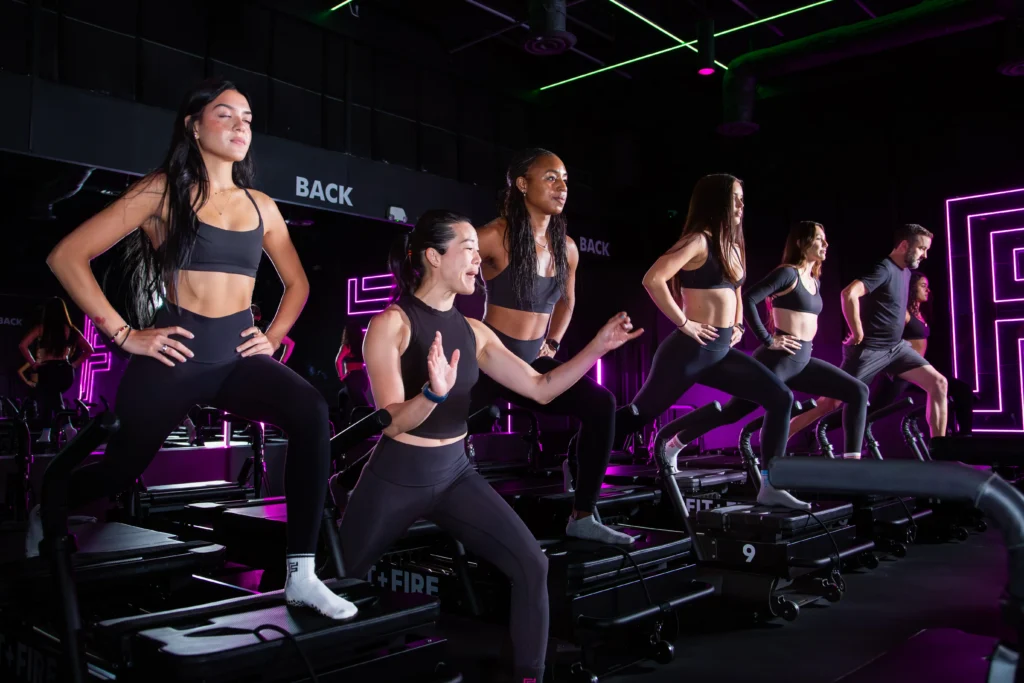
Pilates uses slow, controlled movements that improve your strength and flexibility. This puts less pressure on your joints, making each exercise feel safer and more manageable for you.
Strengthens the Muscles That Support Your Knee
Your knees rely on the surrounding muscles for stability. Your quads, hamstrings, glutes, and calves absorb shock, control motion, and align your knee. Weakness in any of these can cause your knees to work harder than they should..
Pilates exercises target these muscle groups to help build strength without excessive joint impact. Over time, as your muscles become stronger, your knees will have more support during regular activities.
Improves Your Flexibility and Mobility
Tight muscles around your hips, calves, and thighs restrict joint movement, which is often where stiffness starts. The stretching and lengthening exercises done in Pilates help to loosen those muscles and improve your range of motion..
Improved flexibility means reduced tension, allowing you to move more comfortably throughout your day.
Encourages Better Alignment
How your body is aligned matters a lot for joint health. Poor posture and uneven movements put extra stress on your knees and other joints over time.
Pilates naturally reinforces better posture. Many of the movements require you to stay balanced and controlled, especially when using a reformer. This allows you to be more aware of how each part of your body moves and where unnecessary strain may be occurring.
As you continue to perform these movements, you start to notice you’re standing taller, distributing your weight more evenly, and even relying less on one side of your body.
Provides a Low-Impact Exercise Option for You
The best approach to improving joint pain through exercise is making sure you don’t aggravate it in the process. Pilates gives you a low-impact exercise option that allows you to move slowly and at your own comfort level.
As your strength and flexibility improve, you’ll find yourself able to push a little further without discomfort.
Pilates Exercises That Can Help Your Knee Pain
Many Pilates movements focus on lower-body strength that improves your joint mobility. Working with qualified instructors helps to make sure that you perform the movements correctly and safely..
Here are a few beginner movements to help support your knee health:
Bridges
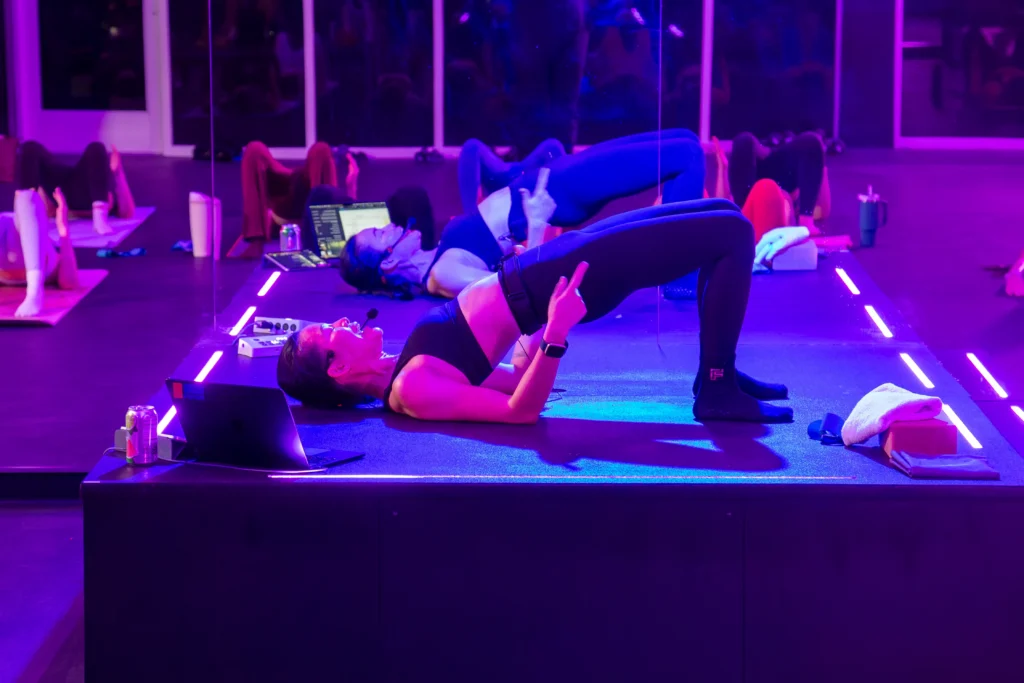
Bridges strengthen your glutes and hamstrings, stabilizing your knee.
How to do a Bridge:
- Lie on your back with your knees bent and feet flat on the floor.
- Tighten your core and slowly lift your hips up.
- Hold for a few seconds and then lower with control.
Clamshells
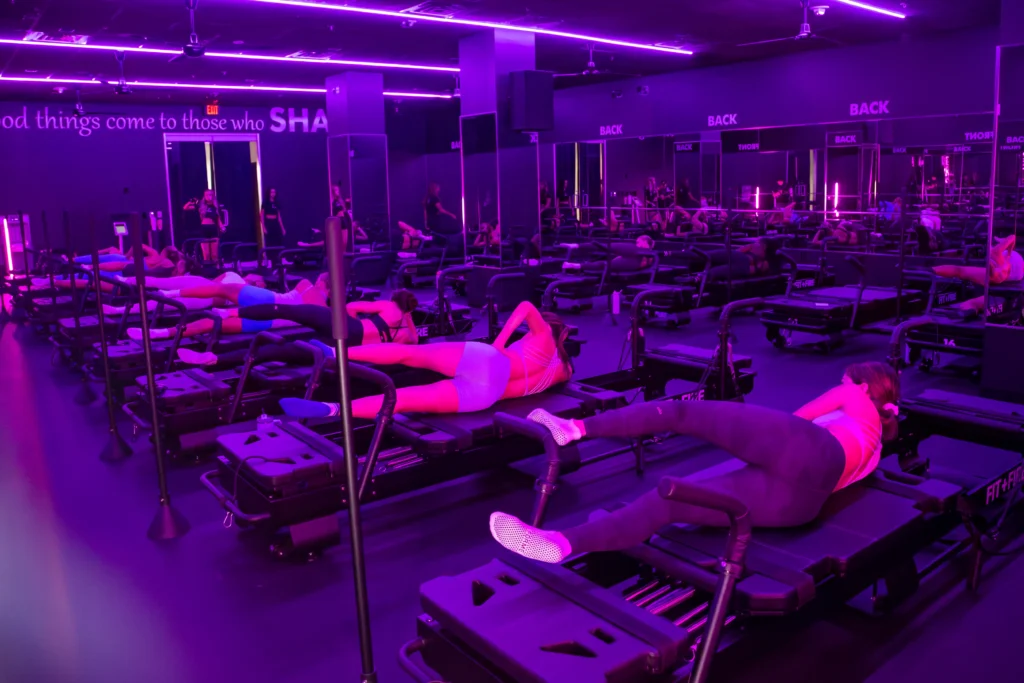
A clamshell targets your hip muscles that keep your knees aligned during the movement
How to do a Clamshell
- Lie on your side with your knees bent.
- Keep your feet together while lifting your top knee slowly.
- Lower your knee back down with control.
Leg Circles
Leg circles focus on your hip mobility to reduce stress on your knees.
How to do a Leg Circle:
- Lie on your back with one leg extended in the air.
- Make small, slow circles while keeping your hips steady.
- Reverse direction after 10 to 20 repetitions.
Squats
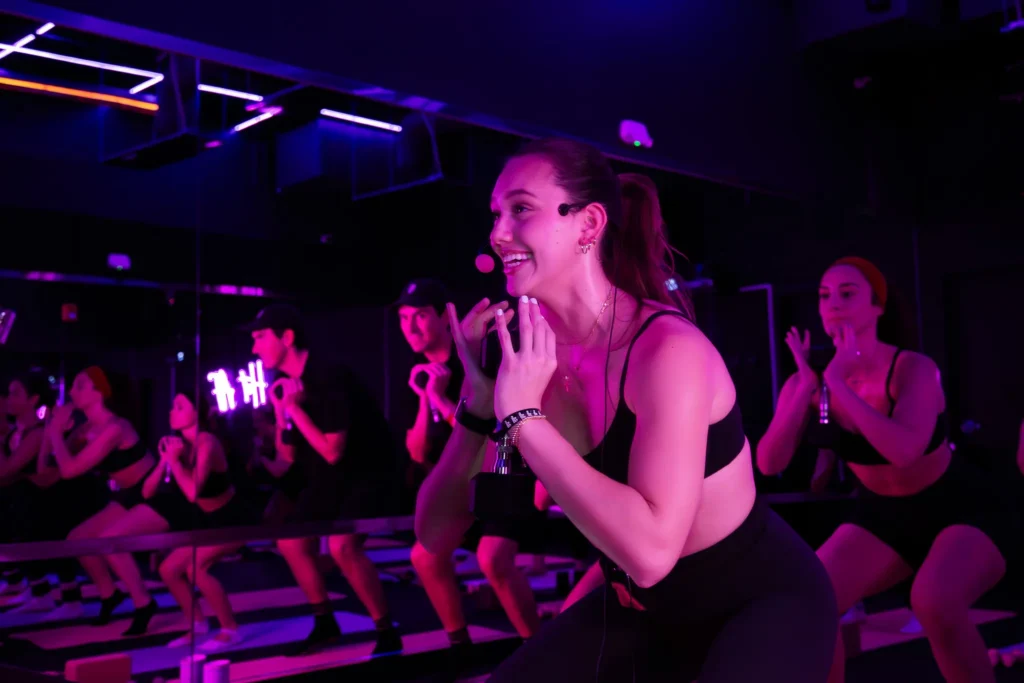
Squats focus on strengthening the muscles in your thighs while avoiding heavy pressure on your knees.
How to do a Squat:
- Stand with your feet hip-width apart.
- Bend your knees slightly while keeping your weight in your heels.
- Stand back up slowly and with control.
With any of these exercises, remember that consistency beats intensity. Doing these 2 to 3 times per week will help you far more than going all out during a single session.
What You Should Know Before Starting Pilates
While Pilates is a low-impact exercise, you should still approach it carefully regardless of your pain or injury history.
Here are a few tips to help you get through your first Pilates class without aggravating your pain:
- Start with beginner movements
- Avoid exercises that cause you pain
- Focus on your form
- Modify exercises when you need to
- Speak with your doctor before starting a new fitness program
A trained instructor can help provide personalized support. Just let them know it is your first time and they can assist you with alternative movements.
Can Pilates Really Help You?
People who do Pilates regularly report improvements in their strength, flexibility, stability, and movement. When your muscles are stronger and your alignment is better, your knees simply don’t have to work as hard.
FIT 407 is proud to be the go-to choice for modern Pilates in Orlando. Our instructors are here to meet you wherever you are, whether you’re building endurance, recovering from an injury, or just trying to move through your day with less pain. Reach out to FIT 407 today to learn how our guided program can help support you.