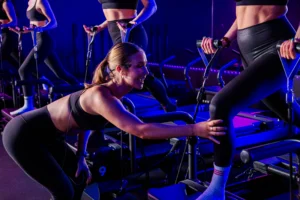

At FIT 407, we often hear clients ask: “If I love Pilates, can I just do it every single day?” It’s a great question and one that deserves more than a quick yes or no. Pilates is one of the most versatile and low-impact workouts available, which makes it tempting to roll out your mat or hop on the reformer seven days a week. But like all forms of exercise, frequency matters.
In this post, we’ll break down the benefits and risks of daily Pilates, share expert recommendations, and give you practical tips to help you build a safe, effective routine. By the end, you’ll know whether a daily Pilates practice is right for you and how to get the most out of it without risking injury or burnout.
What is Pilates & Why People Love It
Before we dive into whether daily Pilates can (or should) be done, let’s revisit what makes this method so unique.
Pilates was developed in the early 20th century by Joseph Pilates as a system for building strength, flexibility, and body control. Its core principles breath, concentration, control, centering, precision, and flow set it apart from other fitness methods. Unlike high impact workouts, Pilates emphasizes mindful movement, alignment, and core engagement, making it accessible to people of all ages and fitness levels.
Why do people feel drawn to do it every day? A few reasons stand out:
- Low-impact on joints: gentle on the body compared to running or weightlifting.
- Versatility: it can be adapted to beginners or advanced athletes, on the mat or with reformer equipment.
- Body awareness: Pilates teaches you how to move smarter in everyday life, which makes many want to keep practicing.
With so many benefits, it’s easy to see why someone might think daily Pilates is a great idea. But let’s weigh the pros and cons.
Benefits of Daily Pilates

Physical Benefits
Practicing Pilates every day can bring noticeable physical improvements:
- Core strength: a strong, stable core is one of the biggest takeaways from Pilates, supporting posture and reducing back pain.
- Improved posture: daily practice helps combat slouching, especially for those with desk jobs.
- Flexibility and joint mobility: controlled stretches and movements promote long term joint health.
Mental & Emotional Benefits
Pilates is not just a workout it’s also a moving meditation. Practicing daily can:
- Reduce stress and anxiety.
- Boost energy levels by stimulating circulation and breath control.
- Promote mindfulness and body awareness.
Long-Term Gains
Over time, consistent Pilates can lead to:
- Injury prevention: by correcting imbalances and improving mechanics.
- Rehabilitation support: many physical therapists integrate Pilates into recovery programs.
- Better movement patterns: making everyday activities like walking, bending, and lifting easier and safer.
Is It Bad to Do Pilates Every Day? (The Risks)

Even with all those benefits, Pilates isn’t completely risk free when done daily. Here’s what to watch out for:
- Overuse injuries: repeating the same movements without adequate rest can strain muscles or joints.
- Muscle fatigue: without recovery, muscles may weaken instead of strengthen.
- Form breakdown: when you practice daily without guidance, you may slip into bad habits that put stress on your spine or joints.
- Plateau effect: if you don’t vary intensity or exercises, your body adapts and stops progressing.
Daily Pilates might not be recommended for:
- Beginners: starting with 2–3 sessions per week is safer.
- People with certain injuries: especially acute back, shoulder, or knee issues.
- Those with health conditions: always check with a doctor before committing to daily training.
How Many Days a Week Should You Do Pilates?

So, what’s the sweet spot? Fitness experts (including our trainers at FIT 407) generally recommend:
- 3–4 sessions per week for most people, to build strength and flexibility safely.
- Daily Pilates can be safe if you mix intensity levels alternating full body workouts with lighter recovery sessions.
FIT 407 Tips for a Safe Daily Pilates Practice
If you’re eager to practice Pilates every day, here’s how to do it safely:
- Warm up and cool down: never skip them. Prepares muscles and prevents injuries.
- Listen to your body: fatigue, soreness, or sharp pain are signals to rest.
- Alternate focus areas: one day core focused, another flexibility, another strength.
- Mix light and intense days: restorative Pilates sessions count, too.
- Use proper equipment: mats, props, or reformer machines make practice safer and more effective.
Conclusion
So can you do Pilates every day? The short answer: yes, but with caveats.
A daily Pilates practice offers incredible benefits: stronger core, better posture, improved flexibility, and mental clarity. But it also comes with risks if you ignore recovery, repeat the same routine, or push through pain. The best approach is a balanced one: vary your sessions, listen to your body, and seek expert instruction when needed.
At FIT 407, we encourage clients to experiment. Try a week of modified daily Pilates alternating between full sessions and lighter restorative work and see how your body responds. If you’re ready to build a safe, sustainable routine, our instructors are here to guide you every step of the way. Ready to explore your own daily Pilates journey? Contact FIT 407 today, or join one of our upcoming Pilates classes to get started.